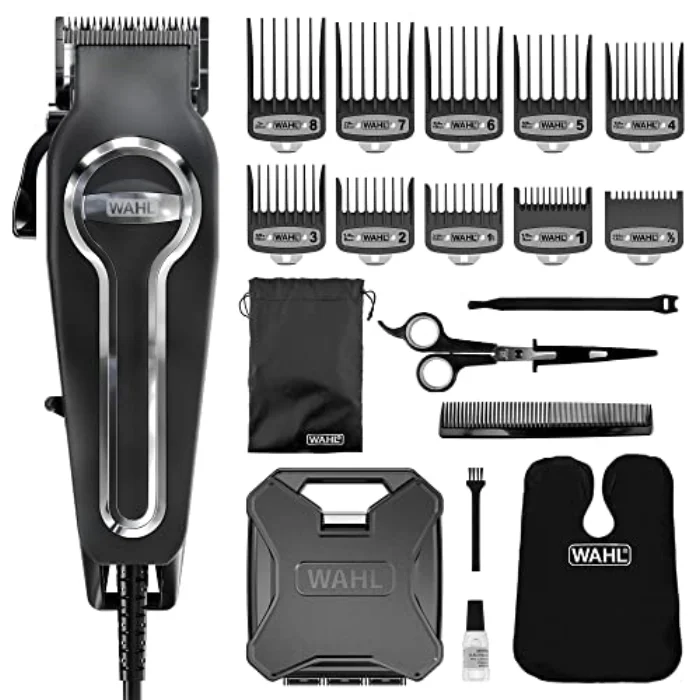
Grades and lengths: what the numbers mean
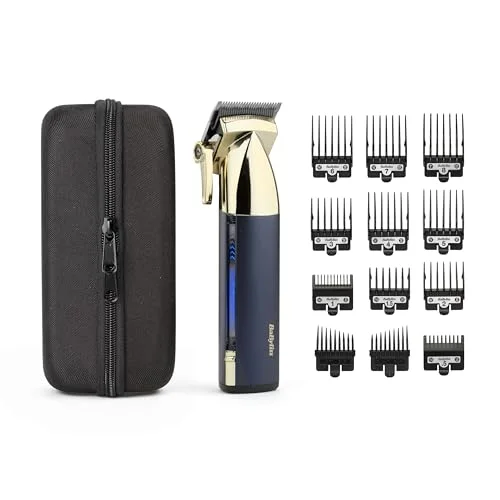
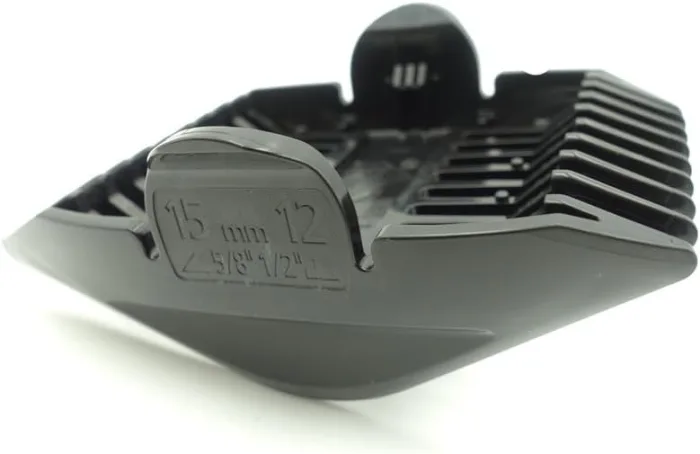
Guard grades are simply a scale of cutting lengths, and they roughly double in length each step. As a general rule, a number 1 leaves the hair about 3 mm long, a number 2 about 6 mm, a number 3 about 9 mm, a number 4 about 13 mm, and so on up to a number 8 at around 25 mm. Some clippers also include shorter half-guards, and cutting with no guard at all, on the bare blade, leaves the closest finish of about 0.5 mm. The exact millimetre figure for each grade varies a little between brands, so always check the printed length on the guard itself rather than assuming every "number 2" is identical.
For most home haircuts you only need a small range of these. A short back and sides might use a 2 or 3 on the sides and a longer guard on top, while a simple all-over buzz might use a single grade. Knowing roughly what length each number gives lets you plan a cut before you start, which is the first step to a tidy result. Our guide to cutting your own hair shows how to put these lengths together into a full haircut.
Colour codes: handy, but not standardised
Many clippers, including the Wahl Elite Pro, use colour-coded guards so you can grab the right length at a glance instead of squinting at small printed numbers. This is genuinely useful in practice, especially mid-cut with hands full. The important caveat is that the colours are not standardised across brands: one maker's red guard is not necessarily the same length as another's. So treat the colours as a quick visual shortcut within a single set, and rely on the printed grade or millimetre figure whenever you need certainty.
Blending between lengths
Blending is what separates a flat, obvious "bowl" cut from a natural-looking one, and it is all about how you move between guard sizes. The basic technique is to start with the shorter guard low down on the sides, then switch to the next size up and cut higher, flicking the clipper outwards at the join to soften the hard line between the two lengths. You repeat this with each longer guard as you move up the head, smoothing each transition. The more closely spaced your guards, the smaller each jump in length, and the easier the blend.
For more advanced fading, a clipper with a taper lever, such as the Andis Master, lets you fine-tune the length continuously rather than in fixed steps, which makes seamless blends much easier. But you can achieve a perfectly respectable blend with fixed guards and patience; it just takes a slower, more careful hand. Practice on a simple two-length blend before attempting anything more ambitious.
Choosing the right guard for your cut
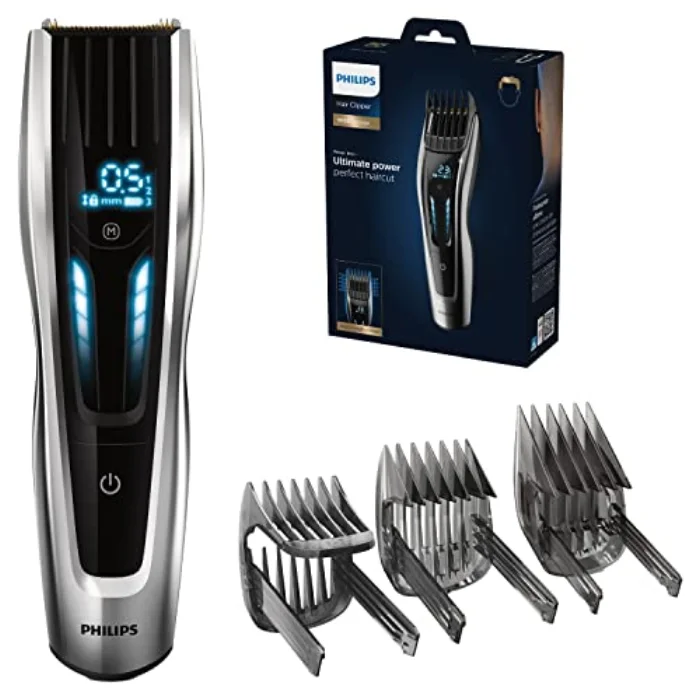
Start one grade longer than your target length, check the result, and only go shorter if you need to, because you can always take more off but you cannot put it back. For a short, low-maintenance look, a 1 or 2 keeps things very short; for a fuller, softer finish, a 4 or above leaves more length to style. Most people settle on a couple of favourite grades for the sides and top once they have experimented. Whichever clipper you own, a generous guard set gives you the most options, so check what is in the box, our buying guide flags the clippers with the best guard ranges. To see which models we recommend, head to our best hair clippers ranking.